Weather Resistance of Common Siding Materials Explained
Compare fiber cement, metal, vinyl, and engineered wood siding for Seattle weather. Learn which materials resist moisture best and last longest.
By Seattle Trim Repair · Published · Updated
Seattle’s rainy climate, with 150 rainy days annually and 37 inches of rainfall, puts siding materials to an extreme test. Moisture infiltration, not aging, is the primary cause of siding failure here, leading to rot, mold, and structural damage that can cost tens of thousands to repair. Choosing the right siding material and ensuring proper installation are not just preferences. They are requirements for long-term durability in the Pacific Northwest.
The challenge in Seattle is that siding faces relentless moisture exposure rather than occasional severe weather. Materials that perform well in hot, dry climates or cold, snowy regions may fail quickly here if they cannot handle persistent dampness. Understanding how different siding materials resist moisture, what installation techniques protect them, and what maintenance they require is essential for making an informed decision that protects your home for decades.
Fiber Cement Siding: Moisture-Resistant and Long-Lasting
Fiber cement siding has become the go-to choice for Seattle homeowners who need a durable, low-maintenance option that can handle the region’s relentless rain. Its unique composition, an inorganic mix of cement, sand, cellulose fibers, and water, prevents it from absorbing moisture, which means no swelling, warping, or other water-related issues.
James Hardie® fiber cement siding is specially formulated to handle heavy precipitation, making it an excellent fit for the Pacific Northwest. Unlike vinyl siding, which can expand and contract with temperature changes leading to unsightly gaps, fiber cement stays dimensionally stable. This keeps caulk joints and seals intact, even during Seattle’s fluctuating weather.
Plus, it is naturally resistant to pests like termites and carpenter ants, which often damage wood siding after moisture exposure. Fiber cement boasts a Class A fire rating, the highest available, because it does not ignite or contribute to fire spread. This material is specifically designed for areas with heavy rainfall, like Seattle, which averages 37 inches per year.
Products such as the James Hardie HZ5 line are tailored for Zone 4 climates, offering enhanced water-shedding and freeze-thaw resistance. Its inorganic makeup ensures it resists rot, mold, and mildew naturally. Many fiber cement options also come with factory-applied finishes that provide excellent UV resistance and maintain vibrant color for longer periods. Some products even meet FEMA flood-resistant standards, meaning they can withstand submersion in water without being destroyed.
One of the standout benefits of fiber cement siding is its longevity. It can last 30 to 50 years or more with minimal upkeep, far outpacing wood siding, which typically requires repainting or resealing every five to seven years. With proper care and installation, some fiber cement products have been known to last over 100 years.
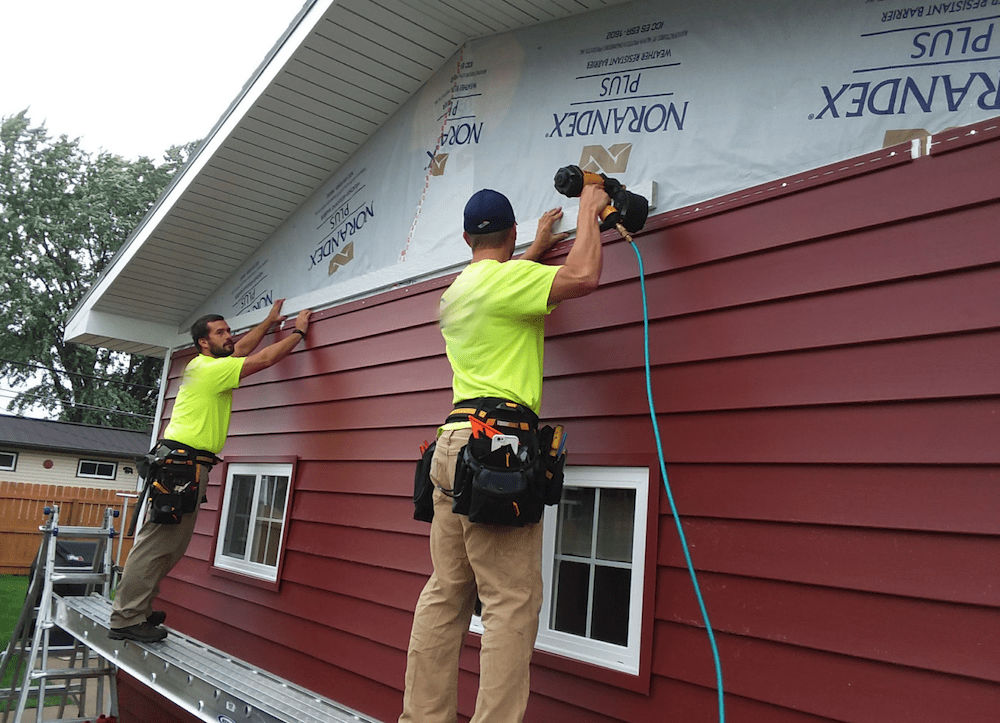
That said, installation is key to ensuring its long lifespan. Proper techniques, like using flashing, moisture barriers, and sealants, are essential. Regular inspections, especially after strong windstorms, can help homeowners catch and address any damage early. For Seattle homeowners, the cost of fiber cement installation typically falls between $10,000 and $18,000 for about 1,000 square feet of exterior wall space. Full replacement projects can range from $20,000 to $60,000 or more, depending on the size of the home and any underlying repairs needed.
While the upfront cost may seem steep, it is an investment in long-term moisture protection and durability, both critical for Seattle’s rainy climate. Fiber cement siding provides the best combination of weather resistance, longevity, and low maintenance for homes in the Pacific Northwest.
Metal Siding: Strength and Longevity with Proper Care
Metal siding is a durable choice for wet climates, but how it handles moisture depends heavily on the material. Aluminum has a natural advantage. It forms a thin, self-repairing oxide layer when exposed to air, offering excellent protection against corrosion. This layer acts as a protective barrier that resists corrosion and quickly repairs itself if the surface is scratched or worn.
Steel, on the other hand, relies on coatings like zinc through galvanization to guard against rust. These coatings act as a sacrificial layer, protecting the steel beneath. This distinction is particularly important in coastal areas. Aluminum, free of iron, does not rust even when exposed to salty air. In these environments, aluminum siding can last 40 to 60 years, while galvanized steel may only hold up for 10 to 20 years.
In less harsh inland climates, such as Seattle proper, galvanized steel can last as long as 70 years with proper maintenance. Advanced finishes like Kynar 500 PVDF add another layer of defense, shielding metal siding from UV rays, salt, and moisture. The way each metal reacts when its protective layer fails is key to understanding its durability. When the coating on steel is compromised, rust spreads quickly. This flaking rust exposes fresh metal, speeding up the corrosion process.
Proper installation is critical to avoid such issues, particularly around fasteners. Using compatible fasteners and applying touch-up coatings to scratches during installation can help prevent galvanic corrosion, where dissimilar metals in contact accelerate decay.
While metal siding is far easier to maintain than wood, it still requires some care to maximize its lifespan. Annual cleaning is essential, especially in coastal areas where salt deposits can trap moisture and accelerate corrosion. A simple garden hose rinse is often enough to remove debris, but for a deeper clean, a soft wash with water and mild detergent is recommended. High-pressure washing should be avoided, as it can force water behind the panels, leading to problems down the line.
Routine inspections, especially after storms, are also important to catch dents or scratches that could lead to rust. The cost of installing metal siding ranges from $5 to $16 per square foot, including materials and labor. Aluminum, with its longer lifespan and lower maintenance requirements, often proves to be a better investment in wet climates. While aluminum siding may need repainting every five to ten years due to fading, its durability and resistance to moisture make it a practical choice for areas like Seattle.
In Seattle’s damp conditions, expert installation and regular maintenance are crucial to getting the most out of your metal siding. Professional installation ensures proper ventilation gaps, compatible fasteners, and protective coatings are applied correctly to handle the region’s persistent moisture.
Vinyl Siding: Affordable and Weather-Resistant
Vinyl siding, crafted from polyvinyl chloride, is inherently waterproof. Unlike wood, it does not soak up moisture, which means it will not rot, swell, or develop mold, issues that are all too common in wet climates. Its design allows rain to shed off easily, making it an excellent choice for rainy regions like Seattle. With proper installation and care, vinyl siding can last anywhere from 20 to 40 years.
Vinyl siding performs exceptionally well in wet climates due to its water-resistant properties. It does not absorb moisture, which helps prevent mold, rot, and warping. One of the perks of vinyl siding is its low maintenance. Unlike other materials, it does not need repainting or sealing to retain its water resistance. Homeowners can save as much as $6,000 by skipping the repainting process. Cleaning is simple too. Usually, a quick rinse with a garden hose does the trick.
Seattle’s steady rainfall, about 37 inches per year, makes vinyl siding a smart option for homes in the area. Its non-absorbent nature protects against structural issues caused by trapped moisture, a problem that can plague absorbent materials. Some advanced vinyl siding systems are even designed to handle winds up to 160 miles per hour.
However, proper installation is key. Damaged or poorly installed panels can trap water behind them, leading to mold and rot in a home’s framing. To avoid these issues, the system must include effective ventilation and moisture barriers, and installers need to leave expansion gaps and use the correct fasteners to allow for the material’s natural movement. Pairing vinyl siding with a reliable gutter system, soffit, and fascia adds another layer of protection against heavy rainfall.
While vinyl siding thrives in wet conditions, it is not without its challenges. Extreme temperatures can test its durability. In freezing weather, vinyl may become brittle and prone to cracking. On the other hand, thinner or lower-quality vinyl can warp or distort when exposed to intense heat. The constant movement from expansion and contraction can eventually create gaps between panels, increasing the risk of water seepage.
As the mercury rises and falls, vinyl expands and contracts. This constant movement can create gaps and warps, leaving your home vulnerable to water infiltration and insulation issues. To ensure durability, opt for thicker, high-quality vinyl panels, which are less likely to crack or warp. Regular inspections, twice a year and after severe weather, can help identify and address any loose or damaged panels before they escalate into bigger problems.
When cleaning, use a low-pressure power washer to avoid forcing water behind the siding, which could lead to moisture issues. Installation costs for vinyl siding typically range from $5 to $10 per square foot, making it one of the most affordable options that still provides excellent moisture protection.
Engineered Wood Siding: A Modern Solution for Moisture Challenges
Engineered wood siding combines the classic look of natural wood with reduced upkeep. Unlike traditional cedar siding, which needs regular sealing and staining, engineered wood is designed with built-in moisture defenses that go deeper than surface-level treatments. During manufacturing, wood strands are treated with paraffin wax and EPA-registered preservatives like zinc borate, offering protection against moisture, termites, and fungal decay.
Integrating waxes and additives during production offers robust moisture and pest resistance. The production process uses industrial-grade resins combined with heat and pressure to create a dense, dimensionally stable panel. This design helps prevent common issues like warping, cupping, and splitting that occur with natural wood. With proper maintenance, engineered wood siding can last 30 to 50 years.
Many manufacturers back their products with warranties covering structural integrity. In Seattle, installation costs typically range from $7 to $14 per square foot. Engineered wood siding is built with multiple layers of protection against moisture. Paraffin wax and zinc borate safeguard the core material, while factory-applied coatings shield the surface from UV rays and rain. This makes it particularly well-suited to Seattle’s climate, which sees over 38 inches of annual rainfall.
Additionally, its lighter weight compared to fiber cement siding can make installation quicker and less costly. The material’s density also provides enhanced resistance to hail and debris damage. Prolonged rain and humidity can significantly impact siding performance, and engineered wood’s integrated moisture protection addresses these challenges effectively.
To fully benefit from engineered wood siding’s moisture resistance, proper installation is key. Every cut edge must be sealed or primed to prevent water from seeping into exposed wood fibers. A 3/16-inch gap should be left at butt joints and where the siding meets trim, allowing for natural expansion and contraction without causing buckling. Using corrosion-resistant nails of the correct length, and ensuring they are not overdriven, helps avoid creating entry points for moisture.
In areas with heavy rainfall, like Seattle, installing a ventilated rain screen behind the siding is crucial. This air gap allows trapped moisture to escape, reducing the risk of rot. Additionally, flashing, whether metal or self-adhering, should be installed around windows, doors, and roof intersections to direct water away from the structure. Routine maintenance, such as clearing debris from the siding’s base to maintain drainage and trimming vegetation to improve airflow, is also essential.
LP SmartSide engineered wood offers a good balance of aesthetics and performance for Seattle homes, with better moisture resistance than natural cedar and less maintenance than wood while preserving the traditional wood appearance many homeowners prefer.
Moisture Management Principles for All Siding Materials
No siding system is completely watertight, so it is crucial to plan for secondary moisture defenses. As the Building America Solution Center puts it, install siding with the mindset that it will leak in its lifetime. This means your wall assembly needs to include backup defenses that remain effective even if the outer layer fails.
The cornerstone of moisture management is a water-resistive barrier installed directly behind the siding. This continuous barrier, whether it is house wrap, a membrane, or integrated sheathing, shields the framing from water infiltration. For optimal performance, choose a water-resistive barrier with a perm rating above 20 to allow for faster drying. In places like Seattle, where surfaces often stay damp for long periods, this drying capability is especially critical.
Another essential element is proper flashing at transition points, which can make or break your siding system. Problem areas often include windows, doors, and roof-to-wall intersections. Siding most often fails at these transition and interface points where a flashing detail was poorly designed or omitted completely. At roof-wall junctions, kickout diverters are especially important. They guide water into gutters instead of letting it flow behind the siding.
While the water-resistive barrier provides a key line of defense, rain screens take moisture management a step further. By creating a gap, typically 3/16 to 1/4 inch wide, between the siding and the barrier, rain screens offer a drainage path for liquid water and airflow to help vaporize moisture. Without this gap, water can cling between the siding and barrier, damaging building paper and accelerating rot.
The Building Enclosure Moisture Management Institute advises using a rain screen with at least a 3/16-inch airspace in areas with over 20 inches of annual rainfall, especially when using materials that absorb water. For cities like Seattle, which sees 40 inches or more, a rain screen is recommended no matter the siding material. This air gap is particularly important for reservoir claddings like wood, fiber cement, stucco, and masonry, materials that absorb water and require back-side drying to avoid rot and finish failure.
Rain screens can be created using furring strips, plastic drainage mats costing roughly $0.50 to $1.00 per square foot, or textured house wraps. To maximize their effectiveness, ensure the gap is ventilated with openings at both the top and bottom to encourage air circulation. These openings should be covered with a 1/16-inch or smaller mesh screen to keep out insects and pests.
Flashing details are critical to keeping water out of your siding system. Flashing operates on a simple principle: water will always follow the path of least resistance. Water is lazy. It will never work hard to find its way into your house. In fact, water always will follow the path of least resistance. The goal is to direct water safely away from the structure.
Head flashings over windows, doors, and horizontal trim should include end dams to stop water from running off the edges and into the wall assembly. These flashings must be tucked under the water-resistive barrier, not over it, so water flows over the flashing instead of behind it. At roof-to-wall intersections, kickout flashings are a must. They redirect roof runoff into the gutter system, away from the siding.
Reliance on caulk alone is not enough. Over time, caulk can fail due to wood movement or UV exposure, allowing water to seep behind the siding. Metal flashing, on the other hand, provides a long-lasting, maintenance-free barrier that continues to work even if exterior joints open up.
For wood, engineered wood, and fiber cement siding, it is also a good idea to prime all six sides of the boards before installation to improve resistance to rot. In coastal areas within 3,000 feet of the ocean, stainless steel fasteners are recommended, while hot-dipped galvanized or aluminum nails are suitable for other wet climates to prevent corrosion. Lastly, ensure there is a six-inch clearance between the ground and the first course of siding. This gap helps prevent moisture wicking and keeps pests at bay.
Choosing the right siding for Seattle’s damp climate means prioritizing materials that can handle constant moisture and ensuring proper installation. In this region, siding often fails not because of age but due to trapped moisture, a constant reminder of Seattle’s year-round drizzle.
Even top-tier options like James Hardie® fiber cement or metal siding can fail if critical elements like flashing, moisture barriers, or caulking are installed poorly. To ensure long-term protection, work with professionals who understand the unique challenges of the Pacific Northwest. Techniques like ventilated rain screens and advanced waterproofing are key to keeping your home protected.
Maintenance is another vital piece of the puzzle. Routine care is essential, especially after storms. Inspections can reveal early signs of trouble, like buckling or soft spots, before they escalate. Peeling paint or discoloration often points to more serious underlying issues that need immediate attention.
For expert siding installation in Seattle that includes proper moisture barriers, rain screens, and flashing, visit /siding-installation/ or call (425) 517-1751.
Not sure how bad yours is?
Send a photo or describe the spot over the phone. We will tell you whether it is a patch, a section, or something structural before anyone comes out.
Mon–Fri, 7:00am – 5:00pm
Questions homeowners ask us about this
Do I need a rain screen system in Seattle?
Which siding material is best for preventing dry rot in Seattle?
What are the first signs of moisture behind siding?
How important is proper flashing for siding in Seattle?
Read next
- Siding Repair
How Seattle Weather Impacts Siding Durability
Seattle's rainy, windy climate accelerates siding deterioration. Learn which materials last longest and how proper installation prevents costly damage.
- Siding Repair
Best Siding for Seattle's Rainy Weather
Compare fiber cement, vinyl, wood, engineered wood, and metal siding for Seattle's wet climate—moisture resistance, maintenance, lifespan, and cost.
- Installation
Best Siding Materials to Prevent Dry Rot
Which siding best prevents dry rot in Seattle's wet climate? Fiber cement and metal siding resist moisture and rot best—full comparison from local repair experts.
Get a straight answer on your siding, trim, or rot
Free estimate, no obligation, and usually a slot the same week. We cover Seattle, Bellevue, Redmond, Kirkland, Bothell, and Tacoma.
Mon–Fri, 7:00am – 5:00pm · Free estimates · Same-week scheduling