
Siding Materials in Seattle
New siding sets your home's look, its defense against the weather, your maintenance workload, and your budget — all at once. In a climate with persistent rain, high humidity, and repeated wet-dry cycling, the material you pick decides how the wall behaves for the next thirty years.
We install and repair three primary materials here — James Hardie® fiber cement, Western Red Cedar, and LP SmartSide® engineered wood — and we repair the vinyl that came with a lot of Puget Sound houses. Below is what separates them where it matters: lifespan, upkeep, cost tier, and how each one actually holds up in our rain.

Four things to weigh before you fall for a look
Every material below wins on at least one of these and gives something up on another. Deciding which one you care about most is most of the decision.
01
Durability and weather resistance
How it stands up to sustained moisture, wind-driven rain, and impact — and whether rot, pests, and fire can touch it at all.
02
Maintenance
The time and money it takes to keep the material performing: washing, repainting, re-staining, and how often each comes due.
03
Aesthetics and style
Whether the material suits the architecture you already have, in the textures and colors you actually want to live with.
04
Cost and return
Upfront material and labor against lifespan. A higher initial number often wins on total cost once maintenance is counted.
At a glance
Lifespan and upkeep figures come straight from each material's own page. Cost tier is relative, not a quote — your number depends on the wall area, the condition of the sheathing underneath, and how much trim and flashing has to be rebuilt.
| Material | Lifespan | Upkeep | Cost tier | Pacific Northwest performance |
|---|---|---|---|---|
| Fiber Cement James Hardie Fiber Cement | 50+ years with proper installation. | Repaint every 15–20 years. No sealing, no staining, no rot checks. | Mid ($$) | Excellent Inert in sustained rain — it does not absorb moisture, so it cannot rot, warp, or swell. |
| Cedar Western Red Cedar | 20-40 years with diligent maintenance. | Clean and re-stain or repaint every 3–7 years. Annual finish inspection. | Premium ($$$) | Good with upkeep Natural tannins help, but neglected cedar in our wet season grays, cracks, and eventually rots. |
| Engineered Wood LP SmartSide Engineered Wood | 30-50 years with proper installation and maintenance. | Repaint every 10–15 years. Check flashing and seals annually. | Mid ($$) | Very good Zinc borate resists fungal decay throughout the board; performance still rides on flashing and sealed cut edges. |
| Vinyl Vinyl Siding | 20-30 years under ideal conditions. | No painting. Wash periodically and inspect behind panels for trapped water. | Budget ($) | Weakest of the four A hollow shell that can trap water against the sheathing and hide structural rot with no surface warning. |
The four materials, in detail
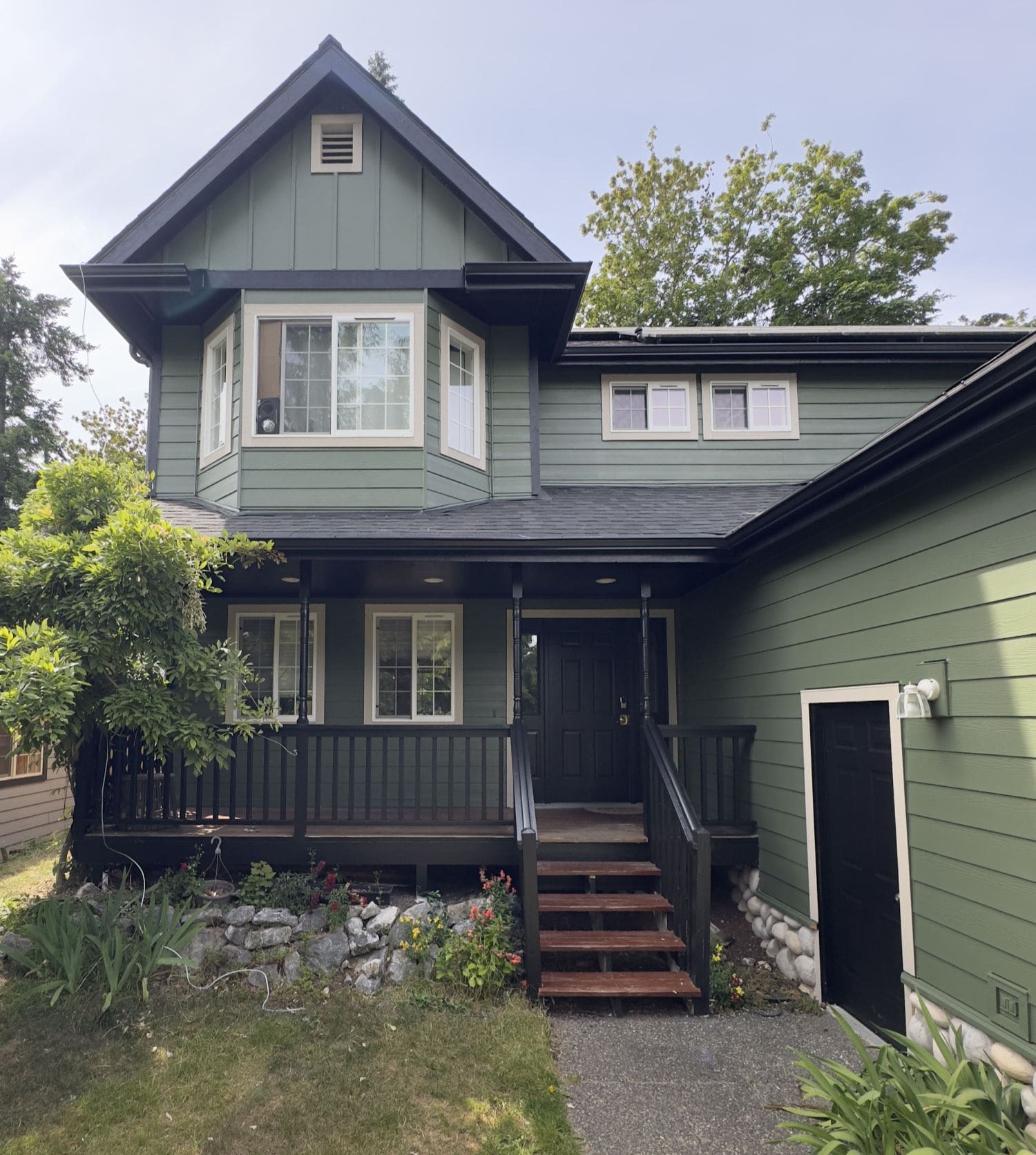
James Hardie Fiber Cement
A composite of cement, sand, and cellulose fibers engineered to resist rot, pests, and fire. The gold standard for durability in wet Pacific Northwest climates.
- Impervious to moisture: will not rot, warp, or swell even in sustained PNW rain
- Completely pest-resistant: termites, carpenter ants, and woodpeckers cannot damage it
- Non-combustible and fire-resistant, often qualifying for insurance discounts
Read the Fiber Cement guide →
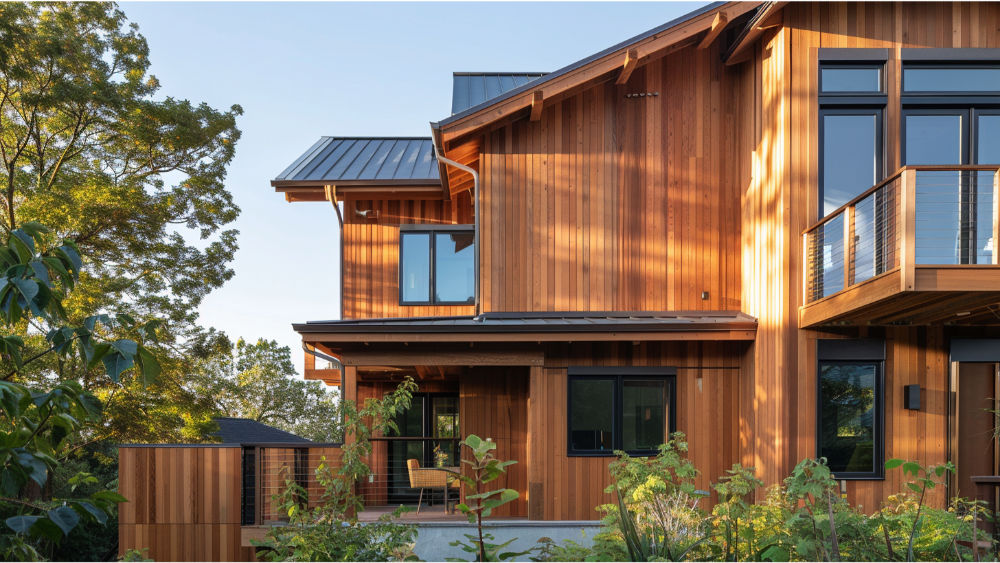
Western Red Cedar
The classic choice for Pacific Northwest homes. Cedar contains natural oils that resist rot and insects, delivering authentic warmth and elegance that synthetic materials cannot replicate.
- Authentic natural beauty: each board is unique with individual grain and color variation
- Inherent rot and insect resistance from natural tannins in the wood
- Exceptionally versatile: can be stained to highlight natural grain or painted any color
Read the Cedar guide →
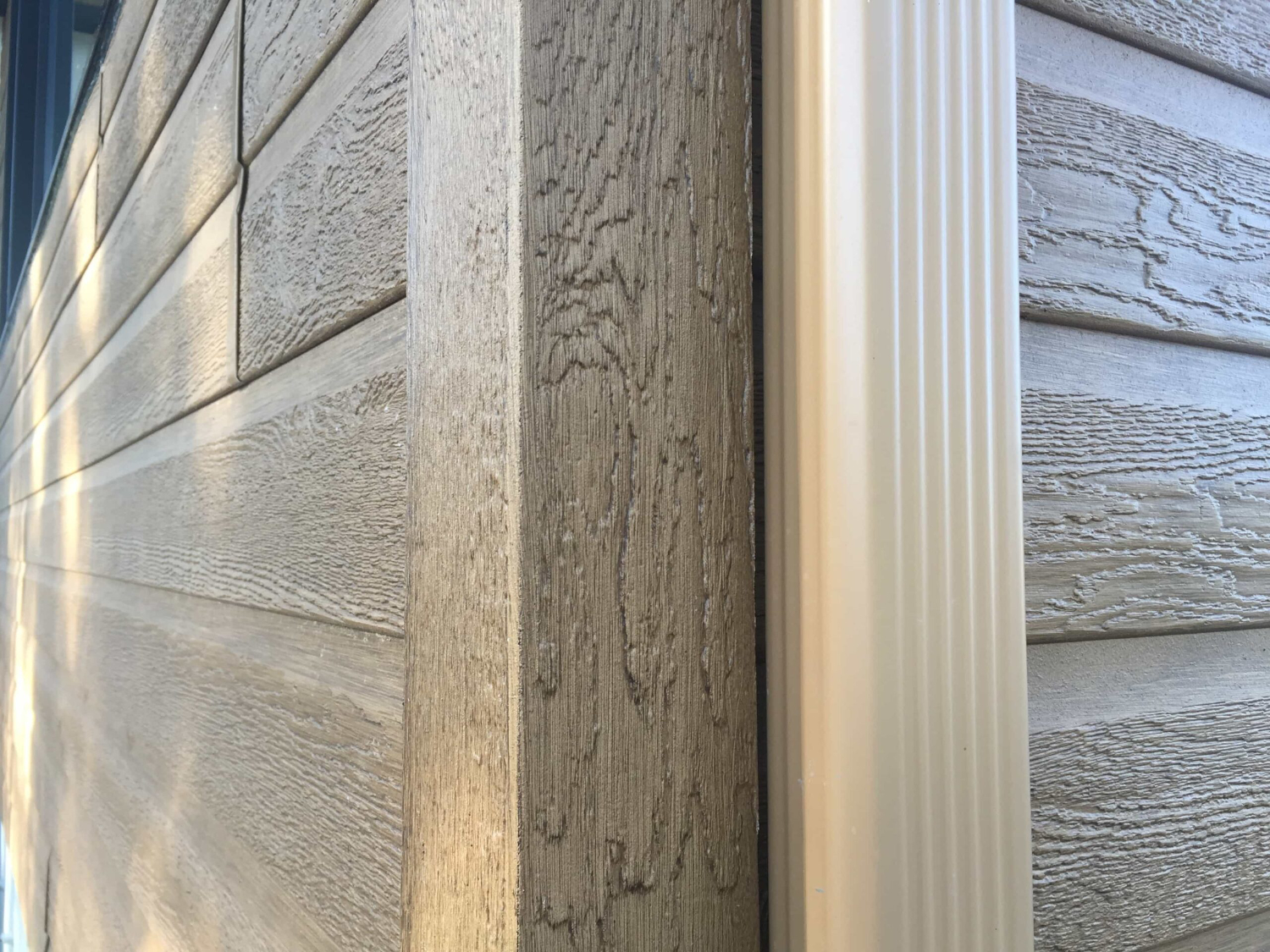
LP SmartSide Engineered Wood
Wood strands and resins treated with zinc borate for superior rot and pest resistance. Combines the authentic beauty of wood with modern durability and lower maintenance than cedar.
- Authentic wood aesthetic: deep, convincing grain texture made from real wood fibers
- Advanced rot and pest resistance from zinc borate treatment throughout the material
- Exceptional impact resistance: stronger than vinyl and less brittle than fiber cement
Read the Engineered Wood guide →
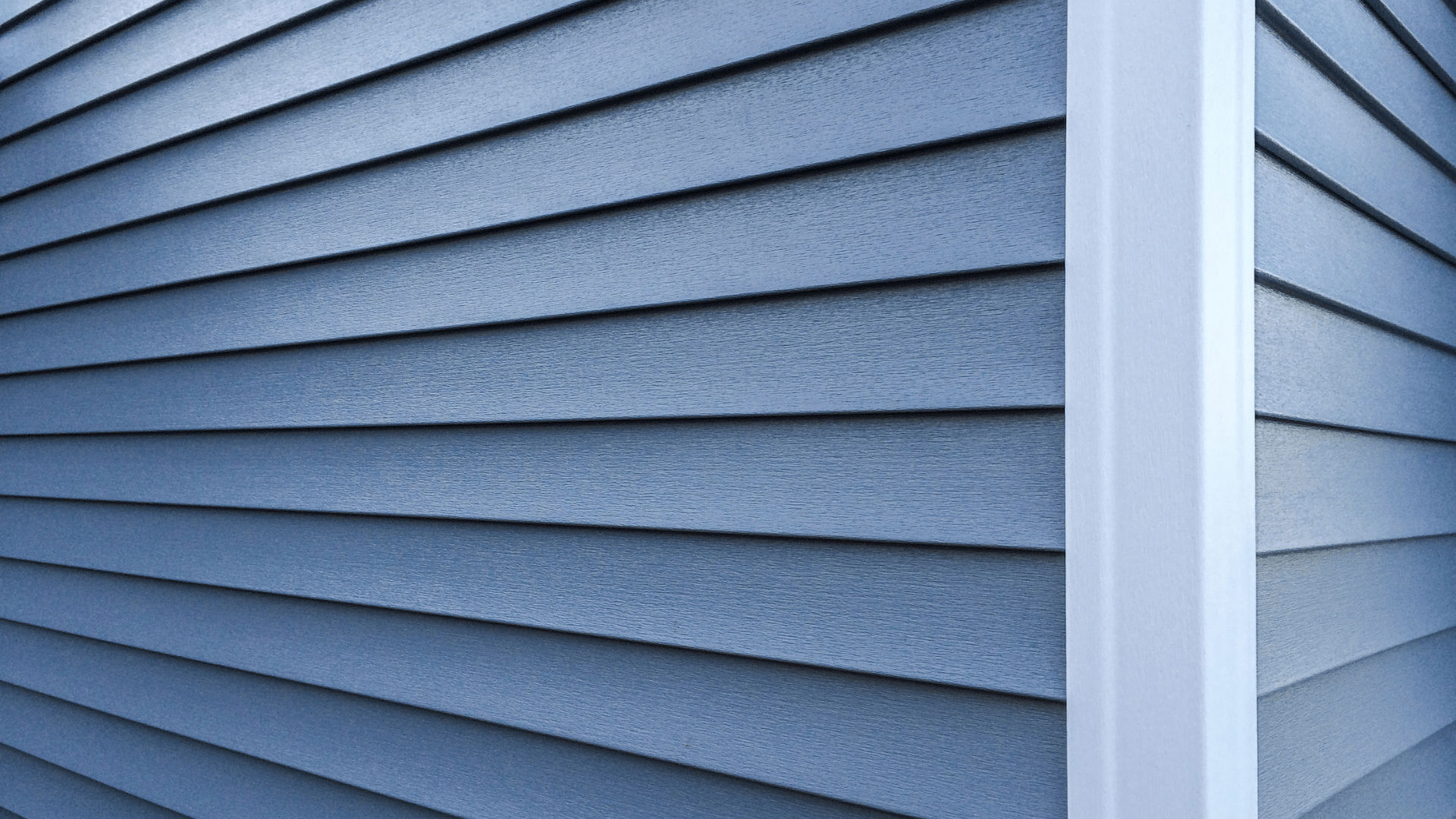
Vinyl Siding
The most affordable siding option with minimal maintenance requirements. Color is baked into the material, eliminating the need for painting, but performance and aesthetics trade-offs exist in Pacific Northwest climates.
- Most affordable siding option for both material and installation
- Never needs painting or staining: color is baked throughout the panel
- Very low maintenance: periodic washing is typically all that is required
Read the Vinyl guide →
Want samples on your own wall?
We bring material samples to the house, talk through the pros and cons against your actual exposure and siding condition, and price the options you are seriously considering.
Mon–Fri, 7:00am – 5:00pm
There is no single best material
There is only the best material for your house, your budget, and how much maintenance you are honestly willing to do. A cedar wall on a sheltered north elevation is a different proposition from cedar on a west face that takes every storm. Vinyl on a rental garage is a different call from vinyl on the house you plan to keep.
Our job on that visit is to be an honest consultant, not a salesperson. We look at the wall you have, tell you what the sheathing behind it is likely doing, and give you a clear estimate for the options you are actually choosing between. If the right answer is repairing what you have instead of re-siding, we will say so.
Before new siding goes on
No material outperforms the wall behind it. Every re-side starts with a tear-off and a sheathing inspection, because hidden rot found after new siding is on is the most expensive kind. If moisture has already been getting in, that gets fixed first — see dry rot repair and exterior trim repair.
Related work
Compare your real options on your own wall
Free estimate with material samples in hand, usually scheduled the same week. Seattle, Bellevue, Redmond, Kirkland, Bothell, and Tacoma.
Mon–Fri, 7:00am – 5:00pm · Free estimates · Same-week scheduling