
Siding Replacement Cost Seattle 2026
How much does siding replacement cost in Seattle? 2026 pricing for cedar, James Hardie, vinyl, and engineered wood. Get accurate cost factors and estimates.
By Seattle Trim Repair · Published · Updated
If you are considering replacing the siding on your Seattle-area home, one of your first and most important questions is: how much should I budget for this project? The cost of a full siding replacement is a significant investment, and understanding the factors that influence the price is key to making a confident decision.
While every project is unique, as of 2026, most Seattle-area homeowners can expect a professional siding replacement to cost somewhere between $12 to $25 or more per square foot, installed. For a typical 2,000 square foot home, this could translate to a range of $24,000 to $50,000 or more.
This guide breaks down why that range is so wide and what factors determine where your project will fall.
The 5 Key Factors That Determine Your Siding Cost
The final price on your quote is a combination of these five critical variables. Understanding each one helps you evaluate quotes and make informed decisions.
1. Siding Material Choice
This is the largest variable. The cost of the siding material itself can vary dramatically based on what you choose.
Vinyl Siding is generally the most affordable option upfront. It resists rot and requires minimal maintenance, making it a budget-friendly choice for many homeowners. However, it can fade over time and may not add as much resale value as premium materials.
Engineered Wood Siding like LP SmartSide is a mid-range option that offers the look of wood with enhanced durability. It performs well in Seattle’s climate when properly installed and maintained, with costs falling between vinyl and fiber cement.
James Hardie Fiber Cement Siding is a premium choice and a top recommendation for Seattle’s wet climate. It costs more than vinyl but offers superior return on investment through its incredible durability, low maintenance, and resistance to moisture, rot, and insects. Fiber cement can last 30 to 50 years with minimal upkeep.
Natural Cedar Siding is often the most expensive option, chosen for its authentic, timeless beauty and natural character. Cedar requires consistent maintenance every 2 to 3 years in Seattle’s climate to prevent rot and weathering, but many homeowners value its traditional Pacific Northwest aesthetic.
2. The Size and Complexity of Your Home
A larger, three-story home will naturally cost more than a one-story rambler due to the sheer square footage of material needed. Complexity also plays a major role.
A home with many corners, gables, dormers, and windows requires significantly more detailed cutting, custom flashing, and labor than a simple rectangular house. Each corner, each window trim detail, and each architectural feature adds time and precision to the installation.
Homes with intricate trim work, decorative brackets, or historical details require even more care and expertise, which increases labor costs.
3. Labor Costs
The quality of the installation is just as important as the quality of the material. A quote from a licensed, insured, and experienced siding contractor in Seattle will include the cost of a skilled crew.
This labor cost covers not just the installation itself, but also project management, safety protocols, and the expertise to handle any unexpected issues that arise during tear-off or installation. In Seattle, labor rates typically range from $65 to $120 per hour, depending on the contractor’s experience and the complexity of the work.
Choosing the lowest bid without verifying experience and licensing often leads to problems down the road. Poor installation can void material warranties and create moisture pathways that lead to rot.
4. Full Tear-Off and Preparation
A professional quote should always include the cost of a full tear-off of the old siding. This is not optional. Removing the old siding allows the crew to inspect the wall sheathing underneath for any hidden dry rot damage, which is extremely common in the Pacific Northwest.
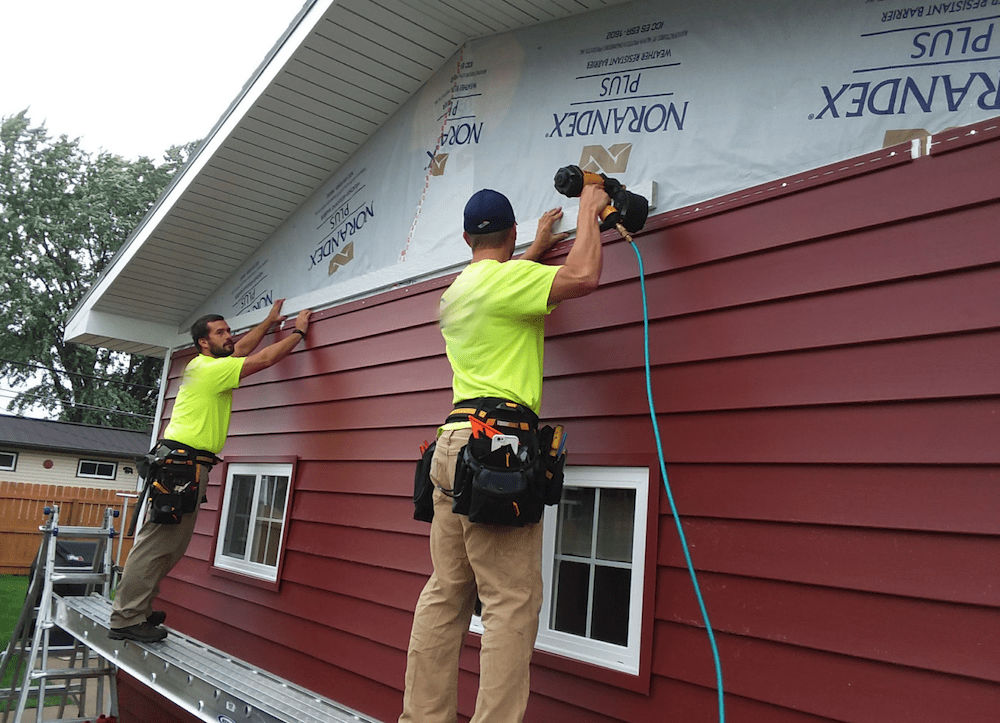
This step also includes installing a new weather-resistive barrier, which is critical for protecting your home from moisture intrusion. If dry rot is found during tear-off, the damaged sheathing or framing must be replaced before new siding can be installed. This is why tear-off and inspection are essential – they reveal the true condition of your home’s exterior envelope.
Disposal fees for the old material are also included in this phase. Depending on the amount of material and local disposal costs, this can add several hundred to over a thousand dollars to the project.
5. Permits and Disposal Fees
Most siding replacement projects require a permit from the city of Seattle or your local municipality. Your contractor will handle this process, and the cost of the permit will be included in the final price.
Permit fees vary by jurisdiction but typically range from a few hundred to over a thousand dollars, depending on the scope of work. The permit ensures the work meets current building codes and is inspected for quality and safety.
Disposal fees for the old siding material are also a factor. Depending on the type of material being removed (especially if it contains asbestos or lead paint, which require special handling), disposal costs can vary significantly.
Example Project Scenarios (Seattle Area Estimates)
To help put it all together, here are a few estimated project costs based on real Seattle-area scenarios. These are general ranges and your actual cost will depend on your specific home and circumstances.
Scenario A: 1,500 sq. ft. Rambler in Tacoma
- Material: Vinyl Siding
- Complexity: Low (simple rectangular footprint, minimal trim detail)
- Estimated Cost: $18,000 to $28,000
This is a straightforward project with minimal architectural complexity. Vinyl keeps material costs down, and the simple design reduces labor time.
Scenario B: 2,200 sq. ft. Two-Story Home in Redmond
- Material: James Hardie Fiber Cement Siding
- Complexity: Medium (some gables, standard windows and trim)
- Estimated Cost: $35,000 to $55,000
Fiber cement is a premium material, and the two-story design requires scaffolding and additional labor. The durability and low maintenance of fiber cement make it a popular choice for Seattle homeowners.
Scenario C: 2,800 sq. ft. Custom Home in Bellevue
- Material: Natural Cedar Siding
- Complexity: High (many corners, gables, decorative trim, intricate details)
- Estimated Cost: $60,000 to $90,000 or more
This is a high-end project with premium materials and significant architectural complexity. Custom trim work, multiple gables, and extensive detail work increase both material and labor costs.
How to Get a Firm, Accurate Quote
The only way to determine the true cost for your home is with a detailed, on-site assessment. A trustworthy quote should be free of charge and itemize the costs for labor, materials, tear-off, permits, and any additional work like sheathing replacement or structural repairs.
Beware of quotes that seem unusually low. They may not include critical steps like full tear-off, proper flashing, or weather barrier installation. Cutting corners on installation to lower the bid often leads to moisture problems and premature siding failure.
A reputable contractor will walk you through the process, explain your material options, show you samples, and provide a fixed-price quote that you can rely on for your budget planning. They will also discuss what happens if hidden damage is found during tear-off and how that will be handled.
Understanding the Value of Quality Installation
Siding replacement is not just about covering your home’s exterior. It is about creating a durable, weather-resistant envelope that protects your home from Seattle’s relentless moisture.
Proper installation includes:
- Complete removal of old siding to inspect for hidden damage
- Replacement of any rotted sheathing or framing
- Installation of a high-quality weather-resistive barrier
- Correct flashing around windows, doors, and roof intersections
- Proper clearances from rooflines, decks, and ground contact
- Sealed cut edges on fiber cement or engineered wood
- High-quality caulking and sealants at all joints
These details are invisible once the job is done, but they are what determine whether your new siding lasts 15 years or 50 years. Paying for quality installation is an investment in your home’s long-term protection and value.
Siding replacement is a major investment, but it is also one of the most effective ways to protect your home from Seattle’s wet climate, improve energy efficiency, and enhance curb appeal.
If you are ready for an accurate quote based on your specific home, contact our team for a free on-site estimate. We will walk you through your options, provide transparent pricing, and help you make the best decision for your home and budget.
Not sure how bad yours is?
Send a photo or describe the spot over the phone. We will tell you whether it is a patch, a section, or something structural before anyone comes out.
Mon–Fri, 7:00am – 5:00pm
Questions homeowners ask us about this
What is the average cost to replace siding in Seattle?
How much does it cost to repair siding versus replacing it?
What affects siding replacement cost the most?
Does siding replacement cost include tear-off of old siding?
Read next
- Siding Repair
Siding Repair vs. Replacement: How to Decide
Should you repair or replace your siding? Decision framework with Seattle cost ranges, the 30 percent rule, and material-specific guidance.
- Installation
Siding Costs in Seattle: Fiber Cement, Cedar, LP
Compare siding material costs, lifespans, and maintenance in Seattle. Learn what fiber cement, cedar, and engineered wood really cost installed.
- Siding Repair
Top Factors Affecting Siding Repair Costs in Seattle
Explore the factors influencing siding repair costs in Seattle, including material choices, labor rates, and climate-specific moisture challenges.
Get a straight answer on your siding, trim, or rot
Free estimate, no obligation, and usually a slot the same week. We cover Seattle, Bellevue, Redmond, Kirkland, Bothell, and Tacoma.
Mon–Fri, 7:00am – 5:00pm · Free estimates · Same-week scheduling