
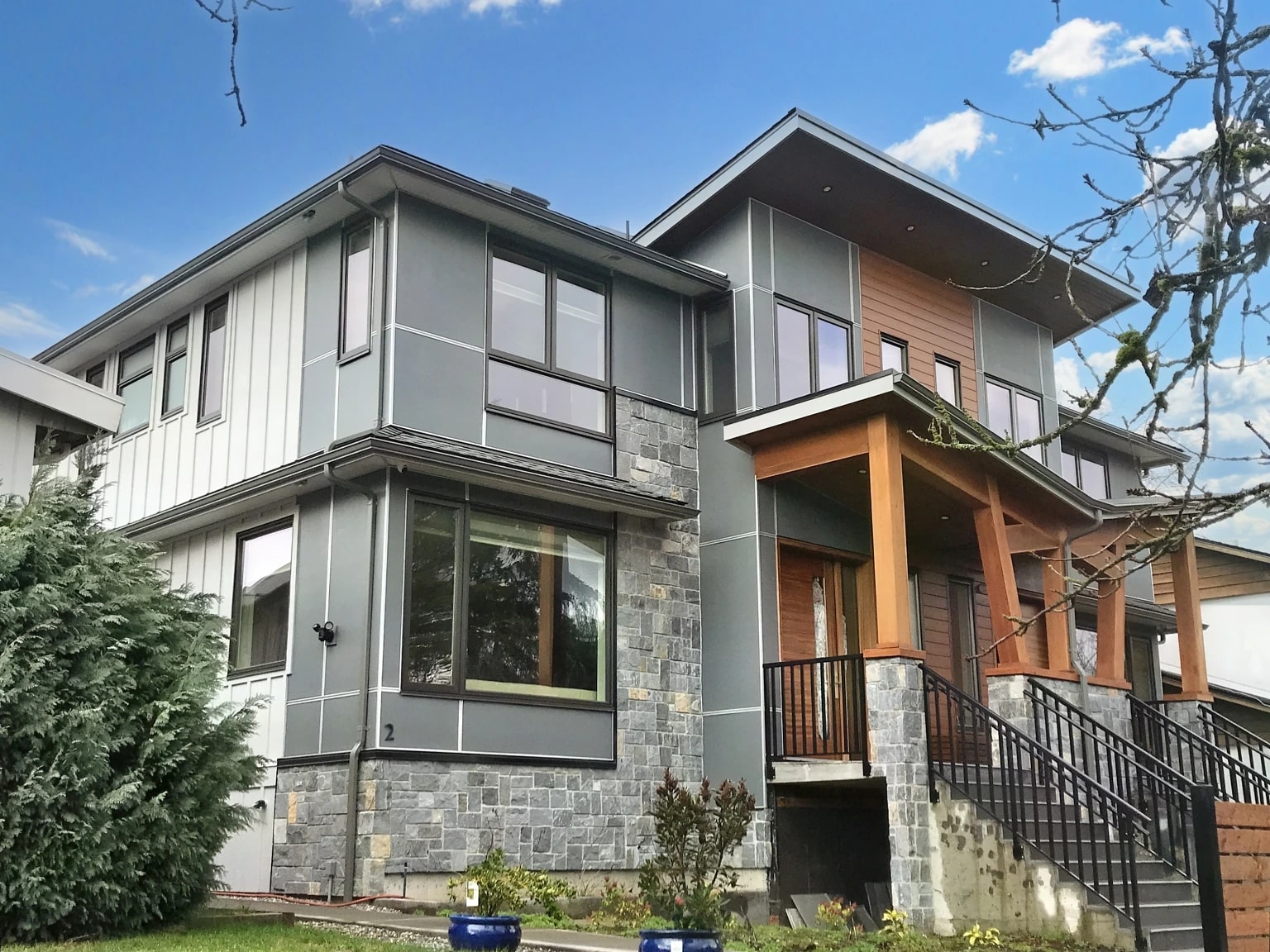
Siding Repair vs. Replacement: How to Decide
Should you repair or replace your siding? Decision framework with Seattle cost ranges, the 30 percent rule, and material-specific guidance.
By Seattle Trim Repair · Published · Updated
You have spotted the damage. Maybe it started as warped boards near the roofline, or perhaps you noticed soft spots and discoloration along the bottom edge of your siding. Now you face a decision thousands of Seattle homeowners wrestle with every year: should you repair the damaged siding, or is it time to replace everything?
The answer is not always obvious. Repair sounds cheaper and faster, but patching a failing system can turn into a money pit. Full replacement delivers a fresh start but comes with a price tag that makes many homeowners hesitate. The right choice depends on several factors specific to your home, budget, and long-term plans. This guide walks you through a clear framework for deciding between siding repair and replacement, with realistic Seattle-area costs, material-specific considerations, and a practical middle-ground option many overlook.
Start With an Honest Assessment of the Damage
Before making a smart decision, understand exactly what you are dealing with. Surface-level cosmetic issues look very different from structural damage once you dig deeper. A professional inspection is the most reliable way to get this picture, but you can start by examining a few things yourself.
Walk around your home and look for these warning signs: boards that are cracked, warped, or buckling; soft or spongy spots when you press on siding (a sign of rot); visible mold, mildew, or fungal growth; paint that is bubbling, peeling, or flaking in large sections; gaps between boards or around windows and doors; and higher-than-expected heating bills, which can signal moisture intrusion behind siding.
Pay close attention to how widespread problems are. Damage limited to one wall or a small section near a gutter downspout tells a very different story than problems showing up on multiple sides of the house. The extent of damage is the single biggest factor in your repair-versus-replacement decision.
The 30 Percent Rule: A Practical Decision Threshold
Contractors and building professionals often use a simple guideline called the 30 percent rule. If more than 30 percent of your siding shows damage or significant wear, full replacement usually makes more financial sense than ongoing repairs.
Why 30 percent? Below that threshold, targeted repairs effectively extend siding life for years at a fraction of replacement cost. Once damage crosses that line, several factors work against repair as a strategy.
Compounding labor costs become an issue. Repairing multiple scattered areas means more setup time, more material waste, and more labor hours. Those costs add up fast. Mismatched appearance is another problem—new repair sections rarely blend perfectly with weathered existing siding, especially with wood products that change color over time. The more patches you add, the worse it looks.
Hidden damage is almost always present when that much visible damage exists. Additional moisture damage, rot, or compromised sheathing underneath cannot be seen until contractors open up walls. Spending $8,000 to $12,000 on extensive repairs to siding that will need replacement within five years is not a good investment.
This rule is a guideline, not a law. A professional assessment gives you a precise picture of your home’s condition and helps you understand where you fall on the repair-to-replacement spectrum.
When Siding Repair Is the Right Call
Repair is often the smarter move when damage is localized and your siding still has significant useful life remaining.
Damage is isolated to one or two areas. A single section of rot near a leaky gutter, storm damage on one wall, or a few cracked boards around a window are all good candidates for targeted repair. The rest of your siding is sound, so there is no reason to tear it all off.
Your siding is relatively young. If siding was installed within the last 10 to 15 years and damage resulted from a specific event—a falling branch, a plumbing leak behind the wall, poor flashing around one window—repair addresses the problem without discarding a system that has decades of life left.
Your budget is limited right now. Quality repairs in the $500 to $3,000 range protect your home from further moisture intrusion and buy time to plan and save for a larger project down the road. The key is to fix the underlying cause of damage, not just cover it up.
You are not planning major renovations. If you are happy with your home’s current look and not preparing for a sale, strategic repairs keep things maintained without the disruption and expense of a full siding project.
Good repair work done by an experienced contractor can last just as long as the surrounding original siding. The goal is to match materials, address the moisture source that caused damage, and ensure the repaired section is properly sealed and finished.
When Full Replacement Makes More Sense
Sometimes repair is just delaying the inevitable. Here are scenarios where replacement is the better long-term investment.
Widespread damage across multiple walls. When you find problems on three or four sides of the house, the siding system as a whole is failing. Patching individual areas will not stop overall decline.
Your siding has reached end of life. Every material has a lifespan. Cedar siding typically lasts 20 to 30 years depending on maintenance, while fiber cement can go 30 to 50 years. If your siding is approaching or past its expected lifespan and showing age, replacement is the practical choice.
Moisture has reached the sheathing or framing. If rot has penetrated beyond siding into wall sheathing, house wrap, or structural framing, you need to open up walls to address deeper damage. At that point, you are already doing much of the labor involved in full replacement.
Energy efficiency is a priority. Older siding systems often lack modern house wrap, proper insulation, and tight sealing. Full siding installation gives you the opportunity to upgrade the entire wall assembly, which can meaningfully reduce heating costs through Seattle’s long, damp winters.
You are preparing to sell. In the Seattle real estate market, new siding delivers strong return on investment. Siding replacement consistently ranks among the top home improvement projects for resale value, often recouping 70 to 80 percent of cost. Buyers notice curb appeal, and they also notice when home inspections flag siding problems.
You want to switch materials. If you are tired of maintaining cedar and want to move to a lower-maintenance option like fiber cement, replacement is your path. You cannot simply patch in a different material over an existing system.
Seattle’s Climate: Why Moisture Changes the Calculation
Siding decisions in Seattle carry extra weight because of our climate. The Pacific Northwest delivers roughly 37 inches of rain per year, much of it as persistent drizzle spread across eight or nine months. Add frequent fog, limited winter sun, and temperatures that hover in the range where mold and fungal growth thrive, and you have an environment that relentlessly tests your home’s exterior.
This ongoing moisture exposure matters for the repair-versus-replacement decision in important ways.
Damage progresses faster here. A small area of compromised siding that might stay stable for years in a dry climate will deteriorate much more quickly in Seattle. Once moisture finds a way behind siding, wet conditions keep it from drying out, and rot accelerates. If you choose repair, you cannot afford to wait. Quick action limits spread.
The underlying barrier matters as much as the siding. Modern house wrap and flashing systems are far better at managing moisture than what was used on many Seattle homes built before the 1990s. Full replacement projects let you upgrade these hidden but critical components, providing much better protection against moisture intrusion for decades.
Material choice affects long-term maintenance. Cedar has been the traditional choice in Seattle for good reason—it is naturally resistant to rot and insects. But it demands regular maintenance including staining or painting every 5 to 7 years, and it will eventually succumb to our climate without that upkeep. Fiber cement and engineered wood products offer longer lifespans with less maintenance, making them increasingly popular for replacement projects.
Material-Specific Guidance: Cedar vs. Fiber Cement
The type of siding on your home significantly affects both the repair process and the replacement decision. The two most common siding materials on Seattle homes are cedar and fiber cement, and they behave very differently.
Cedar repair can be straightforward when damage is limited. Individual boards can be removed and replaced, and a skilled contractor can blend the repair into the existing wall with good color match after staining. However, cedar repair has unique challenges.
Matching the profile and grade of older cedar siding can be difficult. Mills have changed standard profiles over decades, and quality of available cedar has shifted as old-growth timber became scarce. Your contractor may need to source specialty lumber or have boards custom-milled to match, which adds cost and lead time.
Cedar repairs also require careful attention to finish. New cedar is lighter in color and has different texture than weathered boards. Without proper finishing, repaired sections will stand out visually for years. An experienced contractor factors in staining the repaired area and potentially surrounding siding to create uniform appearance.
If your cedar siding is over 25 years old and showing widespread wear, replacement with a more durable material like fiber cement is worth serious consideration. Ongoing maintenance savings alone can justify higher upfront cost over a 15 to 20 year timeframe.
Fiber cement repair differs from cedar in several ways. The material is harder and more brittle, meaning damaged boards cannot be flexed or pried out as easily. Replacement boards need to be cut precisely, and installation requires specific fasteners and techniques.
The good news is that fiber cement profiles and colors have been fairly consistent over years, especially for major brands like James Hardie®. Matching replacement boards to existing siding is usually easier than with cedar, and the material accepts paint well for seamless finish.
Fiber cement damage is also less likely to involve rot behind siding, since the material itself does not absorb moisture the way wood does. However, fiber cement can crack from impact, and if joints or caulking fail, moisture can still reach wall assembly behind it. A proper repair addresses not just visible damage but also flashing and sealing around affected areas.
Cost Comparison: Repair vs. Replacement in Seattle
Understanding the financial picture is essential. Here is what Seattle-area homeowners can generally expect to pay for siding repair versus replacement as of 2026.
Siding repair costs: Minor repair for a few boards in one small area runs $500 to $1,500. Moderate repair covering one full wall section or multiple small areas costs $1,500 to $3,000. Extensive repair involving multiple walls and some sheathing work ranges from $3,000 to $8,000.
These ranges include labor, materials, and finishing. Costs run higher when custom material matching is needed (especially with older cedar), when underlying sheathing or framing needs repair, or when difficult-to-reach areas like upper stories or steep rooflines are involved.
Full siding replacement costs: Cedar siding replacement for an average Seattle home runs $18,000 to $35,000. Fiber cement siding replacement costs $20,000 to $40,000. Engineered wood replacement ranges from $15,000 to $28,000.
Full replacement costs include tear-off and disposal of existing siding, inspection and repair of underlying sheathing, new house wrap, installation, and finishing. Fiber cement runs higher primarily because the material itself costs more and installation is more labor-intensive.
When you compare these numbers, the gap is significant. But consider the math over time. If you spend $3,000 on repairs this year, another $2,500 in three years, and another $4,000 two years after that, you have invested nearly $10,000 and still have aging siding. That money could have gone toward replacement that delivers 30 to 50 years of protection.
The Middle Ground: Partial Replacement
Many homeowners do not realize there is an option between patching a few boards and replacing everything. Partial replacement targets one or two full walls or sections of the home while leaving the rest intact. It is a practical middle-ground solution that deserves consideration.
Partial replacement works well when damage is concentrated. For example, the north-facing and west-facing walls of a Seattle home take the most punishment from rain and limited sun exposure. These walls often deteriorate years before protected south and east sides. Replacing just affected walls gives you new, well-sealed protection where you need it most, at roughly 40 to 60 percent of the cost of a full project.
The main challenge with partial replacement is visual consistency. If existing siding is heavily weathered, new sections on one or two walls may look noticeably different. This can be managed by choosing matching profiles and painting the entire home for uniform finish, but it is something to discuss with your contractor upfront.
Partial replacement also makes sense as a phased approach. You can tackle the most damaged walls now and plan to replace remaining walls in a year or two as budget allows. This spreads cost while addressing most urgent problems immediately.
A Decision Framework You Can Use Today
To bring this all together, here is a simple framework for working through your decision.
Step 1: Estimate extent of damage. Walk your home and roughly estimate what percentage of siding shows problems. If under 30 percent, lean toward repair. Over 30 percent, lean toward replacement.
Step 2: Consider age of siding. If siding is more than halfway through its expected lifespan and showing significant wear, replacement becomes more attractive. If relatively new and damage is event-driven, repair is likely the better value.
Step 3: Think about your five-year plan. Planning to sell within five years? New siding boosts curb appeal and removes a common inspection concern. Planning to stay for the long haul? Either option can work depending on condition and budget.
Step 4: Factor in full cost over time. Do not just compare today’s repair bill to a replacement quote. Estimate what ongoing repairs will cost over the next 10 years and compare that total to the one-time replacement investment.
Step 5: Get a professional opinion. An experienced siding contractor can identify hidden damage you might miss, give you an accurate scope, and help you understand the true cost of each option for your specific home.
Get a Clear Answer for Your Home
Every home is different, and the siding repair versus replacement decision depends on details that are hard to evaluate from an article alone. The condition of your sheathing, quality of original installation, specific moisture patterns around your home, and a dozen other factors all play a role.
For an honest assessment of your siding’s condition and a straightforward recommendation—whether that means targeted repair, partial replacement, or a full siding project—call (425) 517-1751 to schedule a free siding assessment. We will tell you what your home actually needs and help you make a confident decision that protects your home for the long term.
Not sure how bad yours is?
Send a photo or describe the spot over the phone. We will tell you whether it is a patch, a section, or something structural before anyone comes out.
Mon–Fri, 7:00am – 5:00pm
Questions homeowners ask us about this
What is the 30 percent rule for deciding between siding repair and replacement?
When does siding repair make more sense than full replacement?
What are the signs that my siding needs full replacement rather than repair?
How much does partial siding replacement cost in Seattle?
Read next
- Installation
Siding Costs in Seattle: Fiber Cement, Cedar, LP
Compare siding material costs, lifespans, and maintenance in Seattle. Learn what fiber cement, cedar, and engineered wood really cost installed.
- Siding Repair
Top Factors Affecting Siding Repair Costs in Seattle
Explore the factors influencing siding repair costs in Seattle, including material choices, labor rates, and climate-specific moisture challenges.
- Exterior basics
Trim, Siding, and Dry Rot Repair Costs in King County, WA
Comprehensive 2025 cost guide for trim repair, siding replacement, and dry rot repair in King County. Real estimates for Seattle, Bellevue, Tacoma, and surrounding cities.
Get a straight answer on your siding, trim, or rot
Free estimate, no obligation, and usually a slot the same week. We cover Seattle, Bellevue, Redmond, Kirkland, Bothell, and Tacoma.
Mon–Fri, 7:00am – 5:00pm · Free estimates · Same-week scheduling