
Dry Rot vs. Wet Rot: Key Differences for Seattle Homes
Understand the critical differences between dry rot and wet rot. Learn how each spreads, looks, and requires different treatment in Seattle's wet climate.
By Seattle Trim Repair · Published
Discovering rotten wood in your Seattle home is alarming, but before you can fix it, you need to know what you are dealing with. Dry rot and wet rot are both fungal decay, both thrive on moisture, and both damage wood. But they behave in fundamentally different ways, require different treatments, and pose vastly different levels of threat to your home’s structure.
Think of it this way: wet rot is a localized problem, but dry rot is a potential household epidemic. A correct diagnosis is the mandatory first step to successful treatment. This guide breaks down the key differences to help you identify what you might be facing and why it matters.
The Core Difference: The Fungal Culprits
The fundamental difference between dry rot and wet rot comes down to the species of fungi involved and how they behave once established.
Wet Rot
Wet rot is a general term for wood decay caused by a wide range of fungi, most commonly Coniophora puteana, a damp-loving decay fungus that thrives on persistently saturated timber. These fungi require a high and constant level of moisture to grow, typically 50 percent moisture content or higher in the timber.
Crucially, if you remove the source of water, wet rot fungi stop growing and eventually die off. The decay is confined to the area that is physically wet. The fungus cannot travel beyond the moisture source to find new wood. If you have a leaking pipe, the wet rot will only affect the timber in the immediate vicinity of the leak. Fix the leak, remove the damaged wood, and the problem is resolved.
Dry Rot
Dry rot is caused by one specific, highly destructive fungus: Serpula lacrymans. It only needs a moisture content of around 20 percent to get started, which is far lower than wet rot’s requirements. Once established, it possesses a dangerous, unique ability that wet rot does not: it can spread far beyond the initial wet area to attack dry, sound wood elsewhere in your home.
Dry rot develops specialized strands called mycelium that can grow through and across other materials like brick, concrete, plaster, and soil. It creates its own network to seek out new timber to consume. Even more concerning, the mycelium can transport moisture from the original damp source to this new dry area, creating the perfect environment for continued survival and spread.
An untreated dry rot problem that starts in a damp crawl space can spread upward into the walls and floors of your home, destroying timber throughout the structure.
Visual Comparison: What to Look For
You can often distinguish between dry rot and wet rot based on how the affected wood and the fungus itself appear. These visual differences are important clues for correct identification.
Wood Texture
Wet rot makes wood soft, spongy, and damp to the touch. The wood retains moisture and feels heavy. When you press on it with your thumb or a screwdriver, it yields easily but tends to stay intact in a compressed, mushy form.
Dry rot, despite its name, produces wood that is dry, brittle, and crumbles easily when prodded. The wood loses structural integrity completely and breaks apart in chunks or turns to powder. It feels lightweight and hollow.
Cracking Pattern
Wet rot causes linear cracks that run with the wood grain. The wood may darken significantly, often turning dark brown or black, but the cracking follows the natural grain lines of the timber.
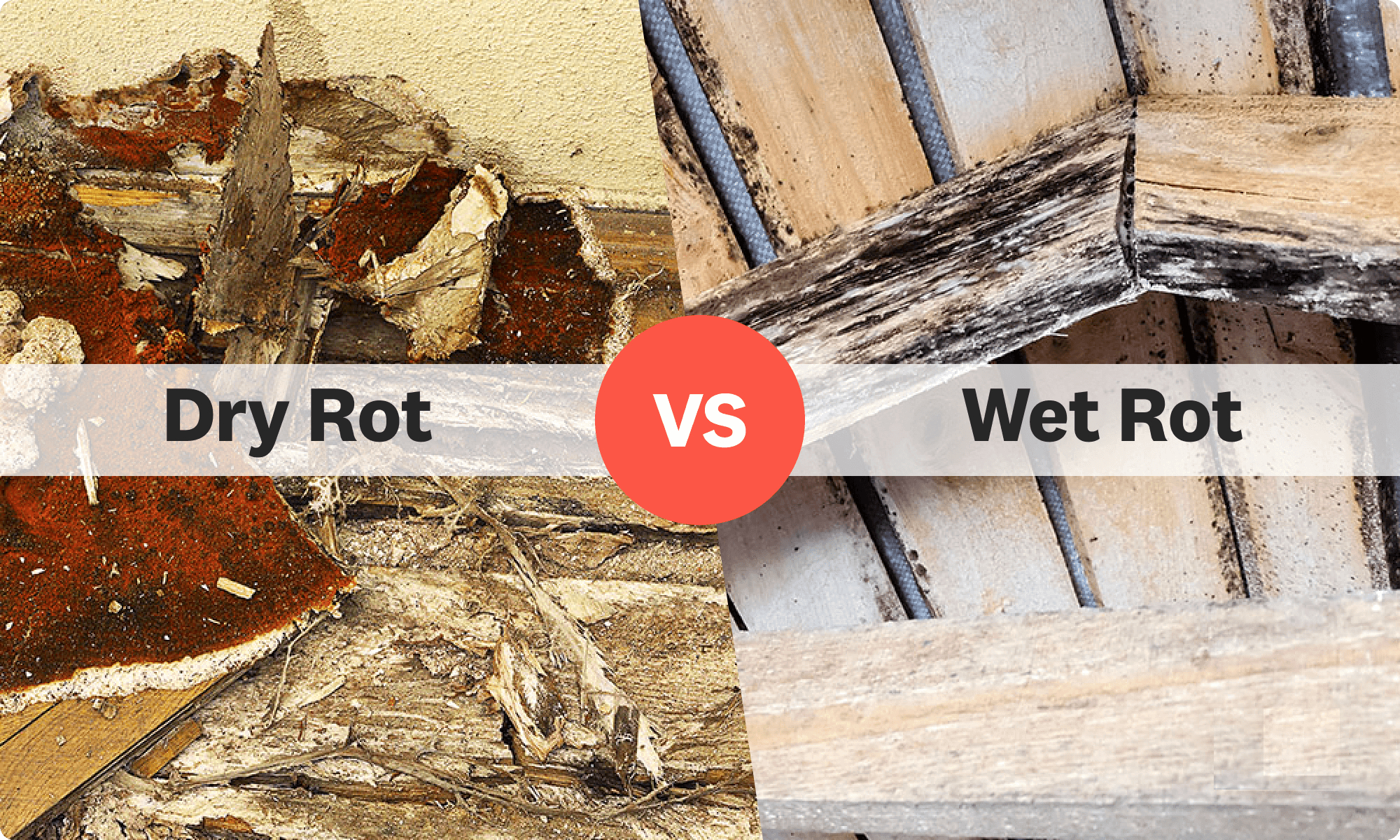
Dry rot produces deep, cubical cracks that run across the wood grain, creating a distinctive blocky or checkered pattern. This cross-grain cracking is one of the most reliable visual indicators of dry rot.
Visible Fungal Growth
Wet rot produces minimal visible growth. If any fungal growth is present, it is typically dark brown or black and looks like a thin film or small mushroom-like growths on the surface.
Dry rot can produce distinctive white, cotton-like mycelium, sometimes with yellow or lilac patches. In advanced cases, it produces large, fleshy fruiting bodies that look like pancakes or brackets, often rust-orange or brown in color. These fruiting bodies are a clear sign of a well-established dry rot infestation.
Smell
Wet rot has a general damp, musty, rotting soil odor – the smell of decaying organic matter mixed with dampness.
Dry rot has a distinct, earthy mushroom-like smell that is recognizable once you have encountered it. This odor often persists even when visible damage is minimal, signaling hidden decay.
The Critical Factor: How the Rot Spreads
This is the most important distinction and the reason dry rot is so much more feared than wet rot in the building industry.
Wet Rot is Localized
Wet rot decay is confined to the area that is physically wet. The fungus cannot travel to find new sources of wood. If you have a leaking window, the wet rot will only affect the window sill and trim in the immediate vicinity of the leak. The rot will not spread to the wall framing ten feet away or to a different floor of your home.
Fix the leak, remove the damaged wood, allow the area to dry, and replace the timber. The problem is solved.
Dry Rot is a Traveler
This is the game-changer. The mycelium of the dry rot fungus can grow through and across materials that are not wood: brick, concrete, plaster, soil, and even behind paint and wallpaper. It creates its own roadway to seek out new, dry timber to consume.
In doing so, it can transport moisture from the original damp source to this new area, creating the perfect environment for its continued survival. An untreated dry rot problem that starts in a damp crawl space can spread upward through masonry walls into the first floor, then the second floor, destroying timber throughout the home.
This spreading ability makes dry rot a structural emergency. Every month you delay treatment allows the fungus to colonize more of your home.
Why the Difference is Crucial for Treatment
Because their behavior is so different, the remediation process for each type of rot is not the same. Treating aggressive dry rot with a simple wet rot solution is a guarantee that the problem will return, often worse than before.
Treating Wet Rot
The process for wet rot is relatively straightforward:
- Eliminate the source of moisture (fix the leak, improve drainage, repair the gutter).
- Carefully remove all the decayed wood, cutting back to solid, sound timber.
- Allow the area to thoroughly dry.
- Replace the removed sections with new, sound timber, preferably pressure-treated or naturally rot-resistant wood for future protection.
This approach works because wet rot cannot spread beyond the wet area. Once the moisture is gone, the fungus dies.
Treating Dry Rot
The process for dry rot is far more extensive and requires a specialist:
- Remove all visibly decayed wood, plus a significant buffer zone of seemingly sound wood – often up to three feet in every direction – to ensure all microscopic fungal threads are removed.
- Apply a professional-grade fungicide to all remaining timber and adjacent masonry to kill any lingering spores and prevent recolonization.
- Identify and fix the original moisture source completely.
- Inspect the entire structure to map the full extent of the spread, including areas that may not show visible damage yet.
- Replace all removed timber with new materials and ensure proper ventilation and moisture barriers are in place.
The buffer zone is critical. Dry rot mycelium can extend far beyond the visible damage. If you only remove the wood that looks rotten, you leave the living fungus in place, and it will simply continue spreading.
Getting a Professional Diagnosis
While this guide provides strong indicators, the only way to be 100 percent certain of which type of rot you are dealing with is to get a professional opinion. The risks associated with misdiagnosing dry rot are simply too high.
A qualified inspector can confirm the species of fungus, map the full extent of the damage using moisture meters and probe testing, and create the correct treatment plan. They can also identify the moisture source that caused the rot in the first place, which is essential for preventing recurrence.
In Seattle’s wet climate, where moisture problems are common and persistent, professional assessment is not just recommended – it is necessary to protect your home’s structural integrity and your financial investment.
If you suspect you have a rot problem of any kind, do not wait. Early professional diagnosis and treatment prevent small problems from becoming structural emergencies. Schedule a free dry rot inspection to get expert assessment and a clear path forward.
Not sure how bad yours is?
Send a photo or describe the spot over the phone. We will tell you whether it is a patch, a section, or something structural before anyone comes out.
Mon–Fri, 7:00am – 5:00pm
Questions homeowners ask us about this
Which is worse, dry rot or wet rot?
Can I treat dry rot and wet rot the same way?
How can I tell which type of rot I have?
Read next
- Dry Rot
Dry Rot Identification Guide for Seattle Homeowners
Learn to spot dry rot signs early: cracked timber, musty odors, soft wood. Seattle-specific identification tips and what to do when you find it.
- Dry Rot
5 Telltale Signs of Dry Rot in Seattle Homes
Learn to identify dry rot before it destroys your Seattle home—cuboidal cracking, brittle wood, musty odors, fungal growth, and fruiting bodies explained.
- Dry Rot
What Causes Dry Rot in Pacific Northwest Homes?
Understand what causes dry rot in Seattle homes, from persistent rain to poor ventilation, and how to prevent structural damage with proven strategies.
Get a straight answer on your siding, trim, or rot
Free estimate, no obligation, and usually a slot the same week. We cover Seattle, Bellevue, Redmond, Kirkland, Bothell, and Tacoma.
Mon–Fri, 7:00am – 5:00pm · Free estimates · Same-week scheduling