
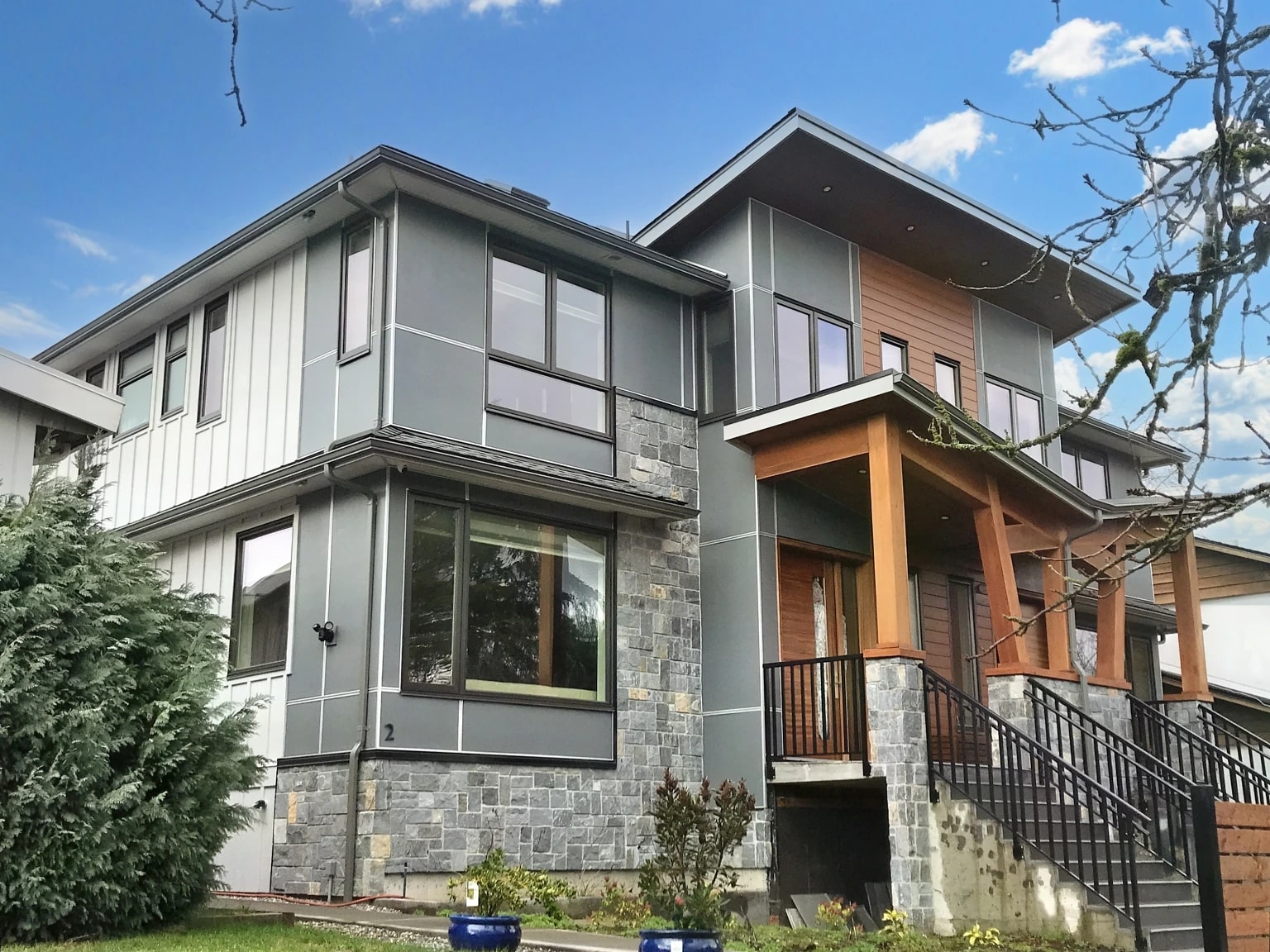
Brick Veneer Siding Costs Seattle: Complete 2026 Breakdown
Seattle brick veneer costs run $15-24/sq ft installed. See material, labor, and permit breakdowns for King County, plus moisture control requirements.
By Seattle Trim Repair · Published · Updated
Brick veneer siding in Seattle costs $15 to $24 per square foot installed, higher than the national $8-18 range due to local labor rates, sales tax, and terrain challenges. A full replacement on a 2,000-square-foot home runs $13,980 to $48,000, with the typical project landing near $17,867.
Seattle homeowners choose brick veneer for its 70-100 year lifespan and resistance to the Pacific Northwest’s relentless moisture, but the material demands careful installation to avoid trapped water and dry rot. Here is what drives the cost, what you can expect to pay, and how Seattle’s climate shapes the decision.
Seattle-Specific Cost Breakdown
Material costs for thin brick veneer in Seattle range from $3.31 to $14.35 per square foot, slightly above the national $3.00 to $13.00 average. That delta comes from Washington’s 10.35 percent sales tax applied to both materials and labor.
Face brick materials run $4.41 to $8.83 per square foot locally versus $4.00 to $8.00 nationally. Face brick is heavier at 40-50 lbs per square foot compared to thin brick’s 5-10 lbs. That weight difference matters: heavy veneer often requires a brick ledge installation at $15 to $30 per linear foot plus a structural evaluation costing $500 to $1,000.
Labor rates in Seattle range from $45 to $85 per hour, reflecting tight local labor markets and the region’s elevated cost of living. National labor rates fall between $40 and $100 per hour. Seattle’s hilly terrain and dense neighborhoods frequently require scaffolding or lift equipment, pushing labor toward the high end of that spectrum.
Removal of old siding adds $1.50 to $6.00 per square foot in Seattle versus $1.00 to $3.00 nationally. Surface preparation runs $1.00 to $2.00 per square foot. Weather-resistive barriers and metal lath for thin brick systems add $0.50 to $2.00 per square foot each. Permit fees range from $200 to $500, though properties in historic districts like Queen Anne or Capitol Hill may face higher costs.
For older homes, budget an extra 10 to 20 percent contingency for asbestos abatement at $1,200 to $3,300 if hazardous materials are discovered during demolition.
Total Project Costs by Home Size
A typical 2,000-square-foot home sees replacement costs between $13,980 and $48,000, with the average project near $17,867. Smaller homes around 1,200 square feet run $8,388 to $28,800. Larger homes at 2,500 square feet range from $17,475 to $60,000.
These estimates include materials (about 60 percent of total cost), labor, old siding removal at $0.90 to $3.00 per square foot, and permit fees of $300 to $900. Three-story homes see labor costs rise 10 to 15 percent due to specialized equipment needs.
Partial installations save significantly. Applying brick veneer to only the front facade or as accent walls can bring costs down to $2,000 to $18,000 versus $36,000-plus for full perimeter coverage.
Repair Costs and Maintenance
Brick veneer repair in Seattle averages $1,870, with typical projects ranging from $842 to $2,969. Given Seattle’s 37 inches of annual rainfall across 155 wet days, moisture infiltration behind veneer is common. Many Seattle homes need repairs every two to six years when drainage details fail.
Individual brick replacement runs $11 to $24 per square foot. Repointing mortar between bricks costs $3 to $20 per square foot. Labor rates for repairs range from $45 to $85 per hour or $1.50 to $6 per square foot, with permit fees adding $200 to $500.
Homes in historic neighborhoods like Ballard or Fremont may require specialized craftsmanship or custom material matching, further increasing costs.
Climate Considerations for Seattle
Seattle’s 155 annual rainy days and marine air create ideal conditions for brick veneer’s durability but also amplify the consequences of poor installation. Moisture trapped behind veneer can cause dry rot in the wood framing and sheathing within a single wet season.
Proper installation requires:
- Through-wall flashing to channel water away from the wall assembly
- Drainage channels behind the veneer to prevent water accumulation
- Breathable masonry sealants that resist absorption but allow trapped moisture to escape
- Functional gutters and downspouts to keep runoff away from the foundation
Brick veneer’s non-combustible properties provide fire resistance superior to wood siding, and its thermal mass helps moderate temperature swings. The material resists rot, moss, and dampness that plague wood siding in the Pacific Northwest, eliminating the 3-7 year staining cycle cedar requires.
Well-maintained brick veneer lasts 70 to 100 years in Seattle, far outlasting wood siding’s typical 20-40 year lifespan. That longevity offsets the higher upfront cost for many homeowners.
Pros and Cons in the PNW Context
Advantages:
- 70-100 year lifespan with minimal maintenance
- Resists Pacific Northwest rot, moss, and dampness
- No 3-7 year repainting or staining cycle
- Enhanced fire resistance
- National ROI of 65-75 percent at resale
- Blends well with Northwest architectural styles in historic neighborhoods
Drawbacks:
- High upfront cost: $13,980 to $48,000 for typical projects
- Improper installation can trap moisture and cause dry rot
- Heavier full-size veneer may require structural upgrades
- Masonry performance in Seattle’s seismic zone is a consideration
- Limited dry-season work windows drive up contractor demand and pricing
Timing and Contractor Selection
Seattle’s short dry season from July through September creates high contractor demand. Scheduling work in fall when demand dips may reduce costs. Always confirm contractors are registered with the Washington State Department of Labor and Industries and carry appropriate bonds and insurance.
A complete tear-off of existing siding is recommended over overlay installations. This allows inspection of sheathing and framing for hidden dry rot, a pervasive issue in Puget Sound homes. Addressing rot during siding replacement prevents trapped decay from spreading behind new veneer.
King County homeowners typically recoup 65-80 percent of siding replacement costs in added home value at resale, with higher returns in competitive neighborhoods.
Making the Decision
Brick veneer delivers decades of low-maintenance durability but requires significant upfront investment and meticulous moisture detailing. In Seattle’s wet climate, improper installation is not a cosmetic issue; it is a path to expensive structural repairs.
For a free on-site inspection and detailed project estimate, contact Seattle Trim Repair at (425) 517-1751. We evaluate your home’s specific conditions, identify moisture risks, and provide transparent pricing before any work begins.
Not sure how bad yours is?
Send a photo or describe the spot over the phone. We will tell you whether it is a patch, a section, or something structural before anyone comes out.
Mon–Fri, 7:00am – 5:00pm
Questions homeowners ask us about this
What is the cheapest way to use brick veneer in Seattle?
How do I prevent moisture problems behind brick veneer in Seattle?
Do I need permits or structural upgrades for brick veneer siding in Seattle?
Why are brick veneer costs higher in Seattle than national averages?
Read next
- Installation
Siding Costs in Seattle: Fiber Cement, Cedar, LP
Compare siding material costs, lifespans, and maintenance in Seattle. Learn what fiber cement, cedar, and engineered wood really cost installed.
- Siding Repair
Top Factors Affecting Siding Repair Costs in Seattle
Explore the factors influencing siding repair costs in Seattle, including material choices, labor rates, and climate-specific moisture challenges.
- Siding Repair
Best Siding for Seattle's Rainy Weather
Compare fiber cement, vinyl, wood, engineered wood, and metal siding for Seattle's wet climate—moisture resistance, maintenance, lifespan, and cost.
Get a straight answer on your siding, trim, or rot
Free estimate, no obligation, and usually a slot the same week. We cover Seattle, Bellevue, Redmond, Kirkland, Bothell, and Tacoma.
Mon–Fri, 7:00am – 5:00pm · Free estimates · Same-week scheduling